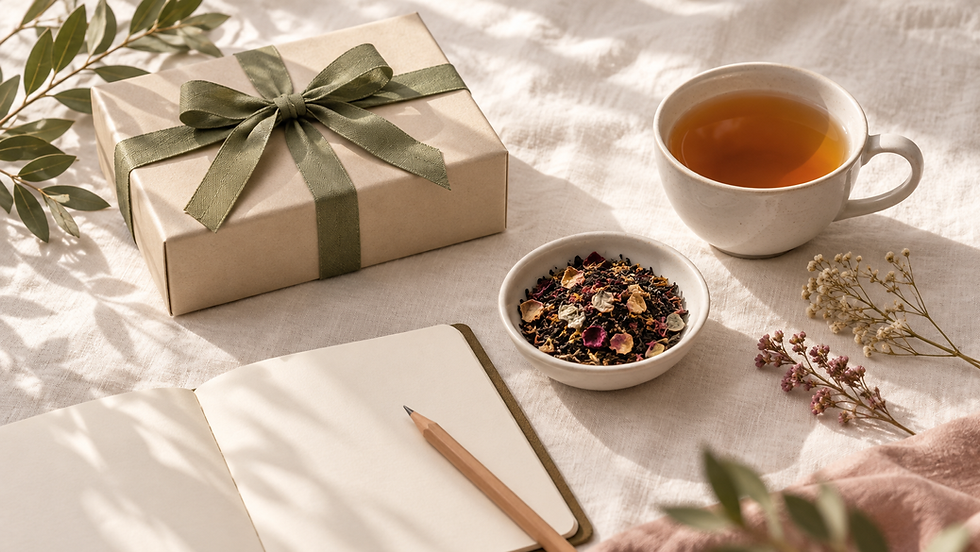
Plan an Autumn Tea Tasting at Home: A Simple Flight for Friends
Three teas, a few small cups, and a table with room to linger: that is enough for an autumn tea tasting. You do not need a matching tea service or a vocabulary of tasting terms. The pleasure is in noticing what changes from one cup to the next—and hearing which one your friends would pour again.

Choose a flight with three different personalities
A flight is simply a small selection served for comparison. For a first gathering, choose three teas that offer a clear contrast. Think light and citrusy, rounded and malty, then fuller and spicier. Three very similar blends can make the differences harder to notice; three distinct cups give everyone something concrete to discuss.
For an autumn-inspired Catalyst selection, consider Citrus Bliss, with lemongrass, ginger, orange peel and apple; Apple Chai, with Assam black tea, apple, cinnamon and cardamom; and Pumpkin Spice Chai, with an Assam base and a fuller spice mixture. The two chai blends contain black tea. Check current availability and each package before buying or serving.
Ask about caffeine preferences and ingredients ahead of time. If your group prefers an entirely herbal tasting, build the flight around those preferences instead. The aim is a welcoming table where guests know what is in their cups.
Set up for small pours and easy conversation
Allow one small cup per person for each round, or plan to rinse and reuse cups between teas. Add a brewing vessel, a strainer if needed, a timer, drinking water, and a card identifying each blend. Keep the packaging nearby so guests can check the ingredients.
For four people, a 12-ounce pot divided into four 3-ounce tasting pours is a manageable starting point. That is a serving suggestion, not a brewing ratio: measure the tea and follow the temperature and steeping instructions on its package. Set out extra hot water separately and leave room for a second cup of the favorite.
Brew each tea on its own terms
Different blends may need different preparation. Brew each one according to its own directions rather than using one temperature or steeping time for the entire flight. Strain or remove the leaves when the steep is complete so the last pour is not still brewing while the first is being tasted.
Serve one tea at a time and begin with the blend that tastes gentlest to you, moving toward more pronounced spice. This is a useful hosting order, not a rule guests must follow. A quick trial cup before your friends arrive can help you decide the sequence.
Give everyone three simple questions
Let each pour cool to a comfortable drinking temperature. Smell it, take a sip, and ask: What do I notice first? What stays after the sip? Would I enjoy a full cup of this? Words such as citrusy, floral, malty, peppery or soft are enough. There is no need to agree.
Make a small tasting card with one line for the tea name, one for the first impression, and one for the cup you would choose again. Leave room for ordinary descriptions, too. “This reminds me of baked apples” can be more useful than trying to find an impressive tasting term.
Keep the first taste simple
Offer the first sip without milk, honey or food so guests can notice the tea itself. Then bring out any additions people enjoy, alongside plain crackers or another simple snack. Keep drinking water on the table. If someone prefers their chai with milk, let the second sip become part of the conversation rather than a correction.
End by returning to the tea each person liked best. That final cup turns a comparison into a relaxed visit. Keep the tasting notes with the blend names, and you have a useful starting point for the next gathering: a new contrast, a familiar favorite, and another reason to put the kettle on.
Build your own autumn tasting flight
Explore different blends with the Catalyst Tea Sampler Set.